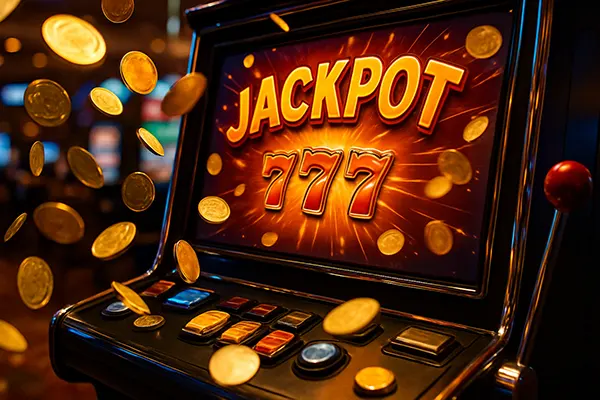
There is a special kind of moment that unfolds when a slot machine begins to celebrate a win. It is not only the flashing lights or the numbers rising on the screen—it is the sound that fills the space, soft at first and then growing into something bright and rhythmic, almost like a small celebration created just for that single moment.
The sound seems to wrap gently around the player, creating a feeling that something meaningful has just happened, even when the win itself is modest.
This experience is deeply sensory. The ears and the emotions respond together, blending the external sound with an internal feeling of reward. What might otherwise be a simple outcome becomes something richer, something that lingers.
And while it may feel natural, even spontaneous, the truth is that these sound effects are carefully designed to shape exactly this kind of response.
Research in cognitive neuroscience shows that sound can significantly amplify emotional reactions to rewards, sometimes even more than visual cues alone. This means that what you hear during a win can influence how strongly you feel it—and how well you remember it afterward.
How Sound Shapes the Feeling of Winning
When a winning spin occurs, the sound is not simply an addition—it becomes part of the experience itself. A bright melody or a sequence of rising tones can make even a small win feel larger and more important than it actually is. The sound adds emotional weight, transforming a simple result into something that feels rewarding on a deeper level.
The human brain is naturally responsive to sound patterns, especially those that feel pleasant, rhythmic, or familiar. Rising tones often create a sense of progress and achievement, while repeating notes build a rhythm that feels stable and satisfying. Together, these elements create a subtle emotional lift that enhances the overall experience.
Studies have found that audio cues can increase perceived reward value by up to 30–40%, meaning that the same outcome can feel more significant simply because of how it is presented sonically.
A player once described this effect clearly:
“Sometimes the win wasn’t even that big, but the sound made it feel like I’d hit something major.”
This highlights how sound does not just reflect the win—it reshapes it.
There is also familiarity in these tones. Many of them resemble sounds from games, celebrations, or even mobile notifications—signals the brain already associates with success or reward. This familiarity makes the experience feel natural and enjoyable, reinforcing the emotional response without requiring conscious thought.
The Quiet Influence on Future Choices
Although the sound of a winning spin may last only a few seconds, its influence often extends far beyond that moment. The memory of the sound lingers, creating a subtle sense of anticipation for future spins.
The brain begins to form a connection: spin → sound → reward.
This loop becomes powerful over time.
Behavioral studies suggest that reward-associated sounds can reinforce repeated actions, even when the rewards themselves are inconsistent. This means that players are not only responding to wins, but also to the expectation of hearing that sound again.
One online comment captured this idea simply:
“I kept playing because I wanted to hear that sound again—it just felt good.”
This shows how the experience shifts. It is no longer just about the outcome, but about the feeling attached to it.
Each new spin carries not only the hope of winning, but also the anticipation of that familiar, satisfying sound. And because that anticipation feels positive, it encourages continuation in a way that feels natural and unforced.
When Sound Creates a Sense of Momentum
Sound also plays a powerful role in shaping the rhythm of the experience. During a winning spin, the sequence of tones often builds gradually—starting softly, rising in intensity, and then resolving in a satisfying finish. This progression creates a sense of movement, as if the moment is unfolding in a meaningful way.
This sense of progression can create the feeling of momentum.
Even when the player is physically still, the sound gives the impression that something is moving forward, that the experience is active and ongoing. This can make it easier to continue playing, because the experience feels continuous rather than segmented.
Research indicates that rhythmic audio patterns can influence time perception, often making experiences feel shorter than they actually are. In practical terms, this means players may spend more time engaged without fully realizing it.
A frequent player described it like this:
“Once the sounds get going, you kind of lose track of time. It all blends together.”
This blending effect is not accidental. The rhythm of the sound smooths the transitions between moments, reducing the natural pauses where reflection might occur.
And when pauses disappear, momentum takes over.
The Role of “Near-Win” Sounds
An interesting aspect of slot machine design is how sound is used not only for wins, but also for almost wins.
Even when a player comes close—matching symbols that nearly align or triggering partial bonuses—machines often produce subtle audio cues that resemble winning sounds. These are not as strong as full-win effects, but they are similar enough to create a sense of encouragement.
Studies show that near-miss events can activate similar brain responses as actual wins, especially when paired with reinforcing sounds. This means that even when a player does not win, the experience can still feel engaging and motivating.
One player shared:
“Sometimes it sounded like I was about to win big, even when I didn’t. It made me want to try again.”
This is where sound becomes more than feedback—it becomes motivation.
A Gentle Awareness of What We Hear

Understanding the role of sound does not take away its enjoyment. The melodies, tones, and rhythms are part of what makes the experience engaging and memorable. But awareness changes how we relate to it.
When we begin to notice how sound shapes feeling, we gain a clearer view of what is happening. We recognize that the intensity of the moment is not only coming from the outcome, but also from how that outcome is presented.
This awareness creates space.
In that space, a person can still enjoy the moment, but with a sense of balance. The sound becomes something to experience, not something that quietly guides behavior without notice.
A Soft Closing Thought
Sound effects during a winning spin carry a gentle but powerful influence. They turn simple moments into experiences that feel richer, warmer, and more meaningful. They do not force emotion, but they invite it—softly, consistently, and effectively.
In the space between sound and feeling, something subtle happens. The experience becomes more than just a result. It becomes a memory, a sensation, something worth repeating.
But perhaps the most important thing is not to silence these sounds, but to truly hear them.
Because when we listen with awareness, the experience remains enjoyable—but it no longer quietly takes control.
And in that awareness, there is a kind of quiet balance, where the moment can be appreciated fully, without being carried too far beyond it.